ASFR did not begin with a website, a forum or social media.
It began when people who had spent years thinking they had a very unusual interest suddenly found one another on the early internet.
The name itself comes from the Usenet newsgroup:
alt.sex.fetish.robots
Take the first letters and you get ASFR.
Over time those four letters stopped being just an abbreviation for a newsgroup and became the name used for a much wider community built around robots, androids, artificial people, transformation and related interests.
This page is an attempt to trace some of that history.
It isn’t going to be complete. A great deal of early internet history has disappeared, old websites have vanished and many discussions from the 1990s were never properly archived. Where dates can be verified, we’ve used them. Where the surviving record is less certain, we’d rather say so than invent a neat version of events.
Before ASFR Had a Name
The basic idea behind ASFR obviously existed long before the internet.
Stories about artificial people go back centuries. Pygmalion falls in love with the woman he has created. E.T.A. Hoffmann’s The Sandman from 1816 features Olympia, an artificial woman who is mistaken for a real person. Villiers de l’Isle-Adam’s Tomorrow’s Eve, published in the nineteenth century, introduced Hadaly, an artificial woman.
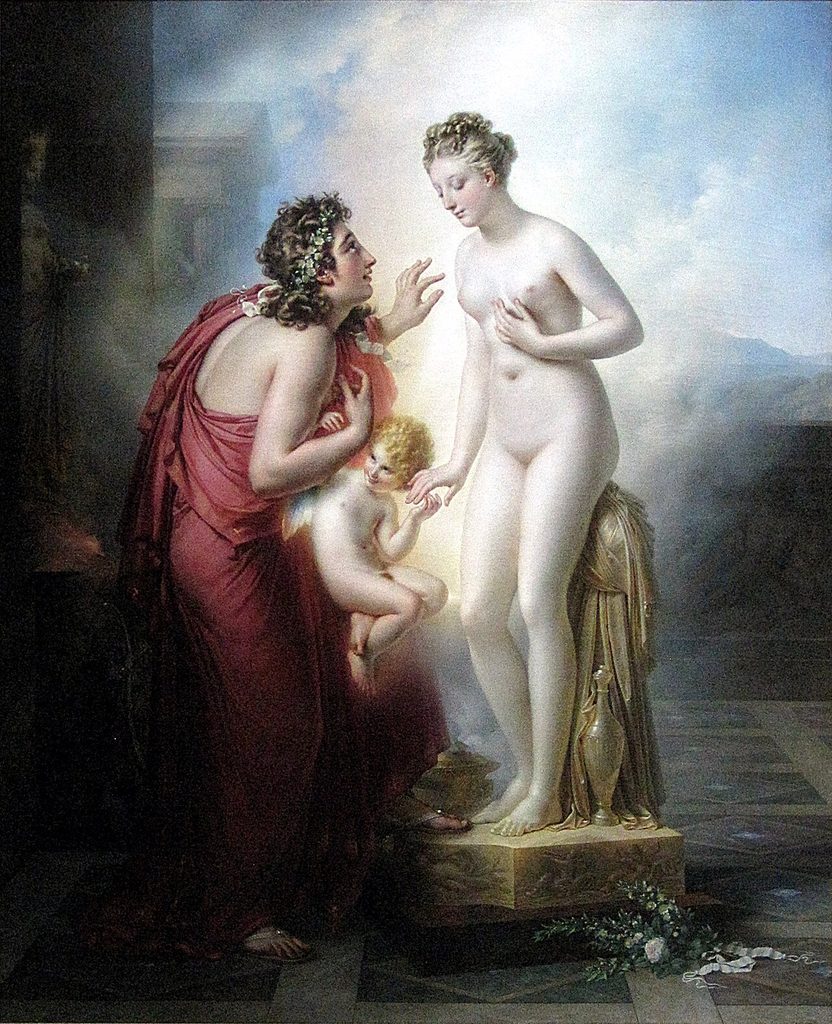
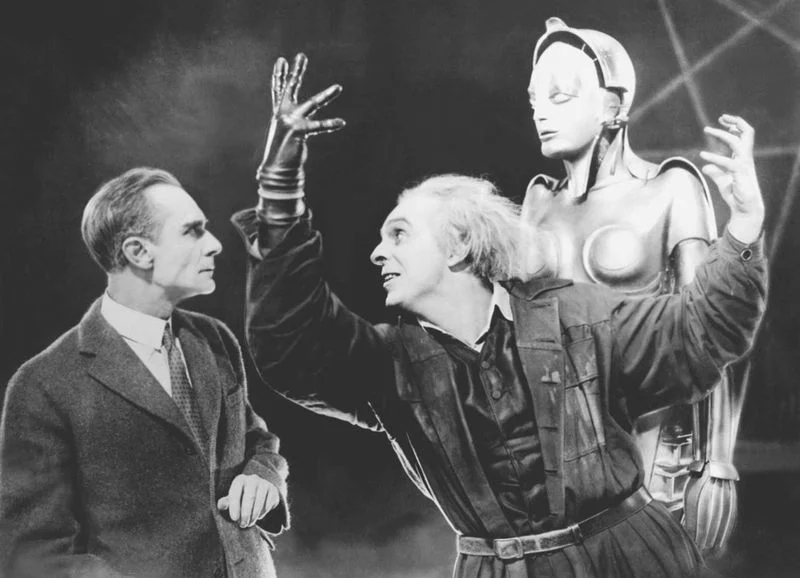
Then cinema gave the idea a visual form.
Fritz Lang’s Metropolis in 1927 featured the Maschinenmensch, one of the best-known early screen robots, taking on the appearance of a human woman.
None of this was “ASFR” at the time, of course. The term did not exist. But the themes were already there: artificial humans, human-looking machines and the uncertainty over where the person ends and the machine begins.
Film and Television
For a lot of people who later found the ASFR community, the interest probably didn’t begin with nineteenth-century literature.
It began with something they saw on television.
Science fiction throughout the 1960s, 70s and 80s produced a steady stream of robots, androids, duplicates, cyborgs and artificial people. Sometimes the robot was obvious from the start. At other times a character who appeared completely human was eventually revealed to be a machine.
Certain productions became particularly well known within the later community.
The Stepford Wives in 1975 is an obvious example. So is The Bionic Woman, whose 1976 “Kill Oscar” story introduced its famous female robots — the Fembots.
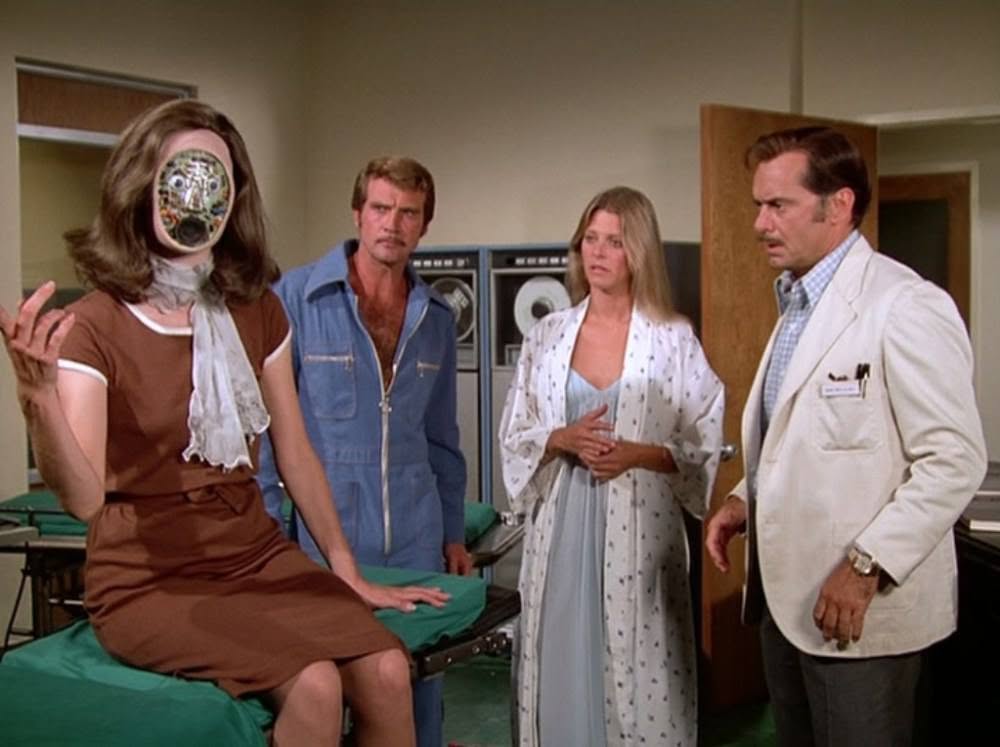
For some viewers it wasn’t necessarily the entire story that stayed with them. It might have been a very particular moment: a strange movement, a mechanical voice, a shutdown, a malfunction or a damaged human-looking character revealing electronics underneath.
Years later, when those viewers found other people discussing exactly the same scenes, they realised those moments hadn’t only stuck with them.
The Internet Brings People Together
Before the web became part of everyday life, there was Usenet.
Usenet consisted of thousands of discussion groups covering almost every imaginable subject. People posted messages to a particular newsgroup and other users around the world could read and reply to them.
Among those groups was:
alt.sex.fetish.robots
The exact creation date of the newsgroup is difficult to establish from the surviving public record. What we can say with confidence is that it was active by the beginning of 1995. A UCLA Daily Bruin article published on 24 January 1995 specifically mentioned alt.sex.fetish.robots among the Usenet groups then available. Daily Bruin
That gives us a firm historical marker.
By the mid-1990s, there was an online place where people interested in robots and artificial humans could finally find one another.
And that changed everything.
From alt.sex.fetish.robots to “ASFR”
At first, ASFR was simply a convenient abbreviation.
alt.sex.fetish.robots
became
A.S.F.R.
But as the group developed, the abbreviation started being used more broadly. It no longer meant only “the Usenet newsgroup”. It could describe the interest itself and the people surrounding it.
That is why ASFR can be slightly awkward to define today.
It began as the address of a discussion group, not as a carefully designed label for one particular fetish or genre.
The community that formed around it covered a surprisingly broad range of interests from the beginning.
Robotdoll and the ASFR FAQ
One of the most important surviving records of the early community is the Alt.Sex.Fetish.Robots FAQ, created by a member known as Robotdoll.
A version dated 3 January 1996 survives in the Google Groups archive. It was already version 2.0, which tells us the FAQ itself had been developing before that point. Google Groups
The FAQ is valuable because it lets us see how people in ASFR described the community at the time rather than trying to reconstruct it thirty years later.
Its definition of the newsgroup was broad. It covered attraction to robots ranging from obviously mechanical machines to humanoid androids, but it also acknowledged overlapping interests involving mannequins, dolls, immobility, mechanical behaviour, hypnosis and transformation. Google Groups
The FAQ also asked questions that would sound very familiar to ASFR members today.
What makes a good robot fantasy?
What films and television programmes contain robot people?
Are people trading tapes?
Can members upload pictures?
That last part is a reminder of just how different the internet was.
Finding Robot Scenes Before YouTube
Today, if someone remembers an obscure robot scene, they can search YouTube, IMDb, streaming services, discussion forums and search engines within minutes.
In the 1990s, things were very different.
If you had seen a robot scene on television ten years earlier and couldn’t remember what programme it came from, there was a reasonable chance you might never see it again.
Members therefore swapped information.
Someone might remember a title. Somebody else might know which episode it was. Another person might have recorded it on VHS.
The ASFR FAQ even included discussion of tape trading and lists of films and television programmes containing robot-related material. P-Synd
That collecting instinct became one of the recurring features of the community.
People didn’t simply discuss robots. They tried to find, identify, catalogue and preserve them.
The Move to the World Wide Web
Usenet remained important, but the World Wide Web was growing quickly.
ASFR started spreading into personal websites, galleries, story archives and link pages.
One of the names closely associated with this period was Robotdoll, who also operated an ASFR.com website.
The early web was nothing like today’s internet. Connections were slow, storage was expensive and even a modest collection of pictures could represent a substantial website.
There were no giant social platforms holding everything in one place.
Instead, ASFR became a loose network of individually run sites.
One page would link to another.
Someone would discover an ASFR site, realise other people shared the interest, and eventually create a page of their own.
It was messy, fragmented and surprisingly effective.
It also created a problem that would follow the community for decades:
when one of those sites disappeared, its content could disappear with it.
Gynoid Gallery
One of the most important sites from this period was Gynoid Gallery.
It was started by Noidguy on 22 June 1997 and concentrated particularly on female robots appearing in film and television.
The site maintained a Master List of productions featuring fembots and included captured images from those productions. Early captures came from VHS sources and later from DVD.
FembotWiki’s surviving history of the site suggests that Gynoid Gallery’s Master List may have been one of the first serious attempts to catalogue female robot appearances online.
That was a big deal at the time.
If you had a vague memory of a female robot from an obscure television programme, Gynoid Gallery might be the place where you finally found out what it was.
The site later added its own bulletin board, giving visitors somewhere to talk rather than simply browse.
That bulletin board would eventually lead into another major part of ASFR history.
Built and Transformation
As the community developed, people needed ways of describing what they were actually interested in.
Two terms became especially important:
Built and Transformation, usually shortened to TF.
Built generally refers to a character who was artificial from the start. She or he was manufactured as a robot, android or artificial person.
Transformation refers to a human becoming artificial.
That distinction sounds straightforward, but both categories can cover enormous amounts of variation.
A Built android might look completely human or completely mechanical.
A Transformation story might involve machinery, programming, nanotechnology, magic, hypnosis or something deliberately unexplained.
Many people enjoy both.
Others have a very strong preference for one or the other.
These terms became useful because ASFR had never really been one single interest.
What People Were Actually Interested In
Even inside those broad categories, different parts of ASFR appealed to different people.
For one person, it might be realistic human-looking androids.
For somebody else, exposed circuitry.
Another person might be interested in robotic speech or movement.
Other common interests included programming, activation, shutdown, malfunction, damaged robots, repetition, immobility, control and the moment a seemingly human character is revealed to be artificial.
The old ASFR FAQ shows that much of this variety was present very early on. P-Synd
That is worth remembering whenever somebody tries to reduce ASFR to one very narrow definition.
There never really was one.
Faceless001
Around 2000, another site appeared that would eventually have an important connection with later ASFR history.
Faceless001 was created by the person later known as Robotman.
The site included robot-related media captures, computer-generated artwork, fiction and other material. FembotWiki’s history records it as operating from 2000 into at least 2001.
It was one of many individually maintained ASFR sites of the period, but its creator would later be responsible for one of the community’s largest archives.
Fembot Central
On 24 May 2002, Fembot Central was created by KOS-MOS.
It developed out of the bulletin-board community surrounding Gynoid Gallery.
The date is particularly well preserved because Fembot Central’s own membership records still show its earliest accounts joining on 24 May 2002, including KOS-MOS and Noidguy.
Fembot Central became one of the major meeting places for the community.
Members discussed media, posted stories and artwork, shared discoveries and simply talked to other people who understood the interest.
For people discovering ASFR during the 2000s, Fembot Central often filled much the same role that alt.sex.fetish.robots had filled for an earlier generation.
It gave people somewhere to arrive.
ASFR Becomes Something Worth Studying
By this point, the community had existed long enough to develop its own language, shared references and culture.
Researchers began taking notice.
One of the best-known studies came from filmmaker and academic Allison de Fren, who examined ASFR as an online subculture rather than simply treating it as an oddity.
That distinction matters.
By the early 2000s, ASFR was not just a collection of unrelated people who happened to like robots.
There were community sites.
There were writers and artists.
There were recurring terms.
There were arguments, preferences, shared references and friendships.
There was, in other words, a culture.
The Problem of Disappearing Websites
The longer the community existed, the more obvious one problem became.
The internet forgets things.
Personal websites close.
Free hosting services disappear.
Domains expire.
People lose interest in maintaining a site.
Images hosted somewhere else vanish.
Old message boards become unreadable after software upgrades.
Hard drives fail.
ASFR has lost a great deal of material this way.
Some things survive only because somebody saved a copy.
Some survive through the Internet Archive.
Some are probably gone for good.
That eventually made preservation itself an important part of the community.
FembotWiki
On 25 February 2008, Robotman created FembotWiki.
It was established partly in response to the loss or retirement of older repositories, including Gynoid Gallery and Fembot Central’s gallery system.
FembotWiki combined several jobs in one place.
It became an encyclopedia of robot and fembot media.
It hosted artwork and stories.
It preserved screenshots.
It maintained lists of films, television programmes and other media featuring artificial characters.
And, importantly, it gave the community somewhere to preserve material that otherwise might disappear.
The scale of the archive eventually became enormous. By February 2026, FembotWiki reported more than 100,000 uploaded files. fembotwiki.com
That is a remarkable difference from the early days when members were identifying scenes through Usenet posts and trading VHS tapes.
The Community Keeps Moving
ASFR has never stayed in one place.
It moved from Usenet to personal websites.
From personal websites to message boards.
From message boards into wikis, galleries, social platforms, chat services and other communities.
Some of the original sites disappeared.
Others survived.
Some changed owners.
Fembot Central itself experienced periods of downtime and eventually moved to a new domain in 2015.
FembotWiki changed ownership in 2019 and later moved to new server infrastructure in 2023.
The platforms changed, but the community kept rebuilding itself somewhere else.
From VHS to The Generative AI “Split”.
The technological change across those thirty-plus years is extraordinary.
The first online ASFR communities existed when many people connected to the internet through dial-up modems.
Images were small.
Video was difficult to distribute.
People traded VHS tapes because sometimes that was the easiest way to share a particular scene.
Then came broadband, DVD captures, digital video, CGI, 3D rendering, streaming sites and much larger online galleries.
Now the community exists in a world of conversational AI, image generation and increasingly sophisticated humanoid robots. The AI question itself has caused a wide split in the new ageing Fembot Central community forum. The banning of any kind of AI generated image, AI enhanced image, AI made ASFR video from the forum and the FemBot Wiki caused a lot of the old names of the community to leave the “Luddite” FembotCentral forum and the wiki.
That split is one of the major reasons asfr.net now exists.
More Than Thirty Years Online
At the very least, ASFR can now point to more than thirty years of documented online history.
We can verify alt.sex.fetish.robots being discussed publicly in January 1995. Daily Bruin
We have Robotdoll’s FAQ from January 1996. Google Groups
Gynoid Gallery followed in 1997.
Fembot Central arrived in 2002.
FembotWiki followed in 2008.
Around those landmarks were dozens of other websites, artists, writers, forums and individual community members whose contributions are much harder to document.
That is part of the reason preserving this history matters.
Where ASFR.net Fits In
ASFR.net is not the beginning of this community.
It is simply another chapter.
The aim is to provide another permanent home for discussion, artwork, stories, media discoveries and the knowledge accumulated by the ASFR community over the years.
It is also an opportunity to preserve some of the history that has already been lost once before.
There are still old websites to identify.
There are people who remember the early Usenet years.
There are artists and writers whose work survives on old drives.
There are stories behind the websites themselves that have never really been written down.
Hopefully this history page can continue growing as more of that information is recovered.
If you were there and remember something we’ve missed, we want to hear from you.
Because the history of ASFR isn’t really the history of a website or an acronym.
It’s the history of the people who discovered that they weren’t the only ones.